The early warning signs of stroke usually start suddenly: weakness or numbness on one side of the body, slurred speech, a drooping face, blurred vision, a severe headache, dizziness or confusion. If you notice any of these, call 112 at once, even if the symptoms fade within minutes.
A stroke can happen suddenly, so recognising its warning signs early can make a critical difference to a person's health and recovery. Knowing the early warning signs of stroke helps individuals and families spot an emergency and get immediate medical help. Stroke prevention also involves understanding conditions that affect blood flow to the brain, including carotid artery disease, in which the arteries supplying blood to the brain become narrowed or blocked.
Dr. (Col) Pranati Swain, an experienced Vascular and Endovascular Surgeon with over 20 years of surgical experience and a background in the Indian Armed Forces, stresses vascular health awareness, early diagnosis and timely medical care. Through patient education, she aims to help people understand their risks and make informed decisions about their health.
What Is a Stroke?
A stroke occurs when blood supply to part of the brain is interrupted or when a blood vessel in the brain ruptures. Without enough oxygen and nutrients, brain cells begin to be damaged within minutes. This can affect movement, speech, vision, memory and other essential functions.
There are two main types of stroke:
- Ischaemic stroke: A blood clot blocks an artery supplying the brain. This is the most common type of stroke.
- Haemorrhagic stroke: A blood vessel in the brain ruptures, causing bleeding.
A transient ischaemic attack (TIA), sometimes called a mini-stroke, causes temporary stroke-like symptoms due to a brief interruption in blood flow. Even if the symptoms disappear, a TIA needs urgent medical assessment because it can signal a higher risk of a future stroke.
What Are the Early Warning Signs of Stroke?
Recognising the signs and symptoms of stroke is essential because the condition may develop suddenly, sometimes without obvious pain. These 10 warning signs need immediate attention, especially when they appear unexpectedly.
1. Sudden Weakness or Numbness on One Side of the Body
One of the most recognisable early symptoms of stroke is sudden weakness, numbness or loss of movement on one side of the body. A person may have difficulty lifting an arm, moving a leg or gripping objects with one hand.
These symptoms occur when the brain areas responsible for movement or sensation are affected. If someone suddenly develops weakness or numbness on one side, don't assume it is fatigue or an awkward sleeping position. Seek emergency medical care immediately.
2. Difficulty Speaking or Understanding Speech
Sudden difficulty speaking is another important warning sign. A person may slur their words, struggle to form sentences, use incorrect words or find it hard to understand what others are saying.
These changes may occur when a stroke affects the parts of the brain responsible for language and communication. Even if the person is conscious and otherwise seems well, never ignore sudden speech difficulties.
3. Facial Drooping
Facial drooping can be an early sign of stroke. One side of the face may look uneven, or the person may struggle to smile normally. Their mouth may droop on one side when speaking or showing their teeth.
A quick check is to ask the person to smile and see whether both sides of the face move equally. Treat any sudden facial asymmetry as a medical emergency, especially if it comes with weakness or speech difficulties.
4. Sudden Loss or Blurring of Vision
A stroke can affect the brain areas that process vision. Some people experience sudden blurred vision, double vision, partial loss of vision or difficulty seeing out of one or both eyes.
These symptoms may appear without pain, which makes them easy to dismiss. However, sudden visual changes can point to a serious neurological problem. Immediate medical assessment is needed to find the cause and start the right treatment.
5. Sudden Severe Headache
A sudden, extremely severe headache, especially one that reaches its peak very quickly, can signal bleeding in or around the brain.
Not every headache means a stroke, but an unusually severe headache with vomiting, neck stiffness, confusion, fainting or neurological symptoms needs emergency attention. Do not wait for the pain to settle before seeking help.
6. Dizziness or Loss of Balance
Sudden dizziness or an inability to keep one's balance may indicate a stroke, particularly when the parts of the brain that control balance are affected.
A person may appear unsteady, veer to one side or struggle to stand without support. Dizziness has several possible causes, but its sudden onset alongside other neurological symptoms should be taken seriously.
7. Difficulty Walking or Sudden Loss of Coordination
A stroke can interfere with the brain's ability to coordinate movement. Someone who was walking normally moments earlier may suddenly stumble, drag one foot or struggle to control their movements.
These changes may occur along with weakness, dizziness or balance problems. If walking suddenly becomes difficult, seek emergency medical evaluation rather than trying to manage the symptoms at home.
8. Confusion or Difficulty Understanding Others
Sudden confusion can be another warning sign of stroke. A person may have trouble following a conversation, understanding simple instructions, recognising familiar information or answering questions appropriately.
These changes may be subtle, particularly in older adults, but a sudden change from normal behaviour deserves attention. Confusion together with facial drooping, weakness, speech difficulties or visual changes should prompt an immediate emergency call.
9. Sudden Numbness or Loss of Sensation
Besides weakness, a stroke may cause a sudden loss of sensation in the face, arm or leg. The affected area may feel unusually heavy, tingling or completely numb.
Symptoms are especially worrying when they affect one side of the body or occur with other neurological changes. Do not wait to see whether the sensation returns. Prompt assessment helps doctors find out whether a stroke or another urgent condition is responsible.
10. Brief Stroke-Like Symptoms That Disappear
Some people have symptoms that last only a few minutes before disappearing, such as temporary weakness, difficulty speaking, vision changes or sudden numbness. Such episodes can indicate a transient ischaemic attack (TIA).
Symptoms going away does not mean the underlying problem has resolved safely. A TIA is an important warning that a more serious stroke may follow. Anyone with temporary stroke-like symptoms should have urgent medical evaluation, even if they feel completely normal afterwards.
How Can You Recognise a Stroke Quickly? Remember FAST
The FAST method helps people recognise common stroke symptoms quickly:
- F – Face: Is one side of the face drooping?
- A – Arms: Is one arm weak or drifting downward?
- S – Speech: Is speech slurred or hard to understand?
- T – Time: Call emergency services immediately if any of these signs appear.
Other symptoms, such as sudden vision loss, severe headache, dizziness or loss of coordination, can also indicate a stroke even when the classic FAST signs are absent.
If you suspect a stroke, call 112 in India or your local emergency number immediately. Note the time the symptoms began or when the person was last known to be well. Do not wait for symptoms to improve, and do not drive the person yourself if an ambulance is available.
How Is Carotid Artery Disease Connected to Stroke?
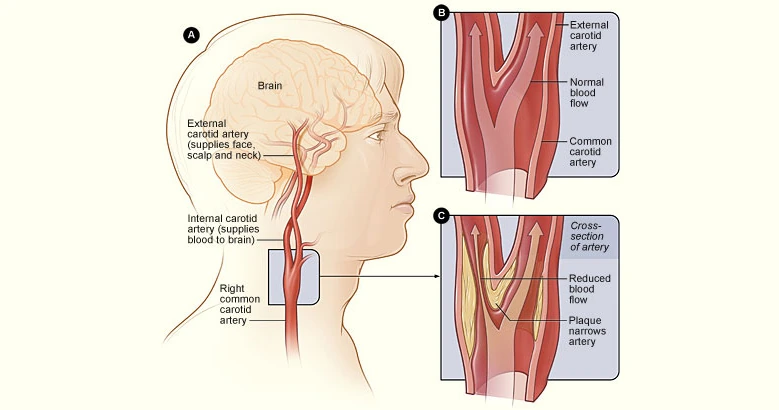
The carotid arteries are major blood vessels on either side of the neck that carry oxygen-rich blood to the brain. When fatty deposits build up inside them, a condition called carotid artery blockage develops. Significant narrowing can reduce blood flow, and material from a diseased artery can break away and block blood vessels in the brain, causing an ischaemic stroke. Some people have no noticeable symptoms until a TIA or stroke occurs.
Risk factors include smoking, high blood pressure, diabetes, high cholesterol, increasing age and a history of cardiovascular disease. Depending on a person's symptoms, medical history and degree of narrowing, doctors may recommend imaging tests, medication, lifestyle changes or a procedure to reduce stroke risk.
For people who need specialist assessment, carotid artery disease treatment in Delhi may involve evaluation by a vascular specialist to decide the right management approach. Carotid surgery or stenting may be considered in selected patients, based on clinical findings and individual risk. Treatment decisions and results vary from patient to patient.
How Can You Reduce Your Risk of Stroke?
Not every stroke can be prevented, but several steps can lower the risk:
- Monitor blood pressure, blood sugar and cholesterol levels regularly.
- Avoid smoking and tobacco products.
- Follow a balanced diet with vegetables, fruits and whole grains, in appropriate portions.
- Stay physically active as advised by your healthcare professional.
- Take prescribed medicines consistently, particularly for high blood pressure, diabetes or heart conditions.
- Seek medical advice about any new neurological symptoms or a history of TIA.
- Discuss vascular assessment with your doctor if you have known carotid artery disease or significant cardiovascular risk factors.
People with existing health conditions should work with their healthcare team on a prevention plan suited to their individual needs.
When Should You Consult a Vascular Surgeon?
A vascular surgeon evaluates diseases of the arteries and veins, including conditions that may add to stroke risk. If you have diagnosed carotid artery disease, significant arterial narrowing elsewhere in the body or a history of TIA, specialist assessment can help decide whether further tests or treatment are needed. You can also read about other warning signs that need a vascular surgeon.
Dr. (Col) Pranati Swain specialises in vascular and endovascular surgery, including carotid artery surgery for stroke prevention. Her approach focuses on careful assessment, personalised treatment planning and helping patients understand their vascular health. However, suspected stroke symptoms always need emergency medical care first. Do not delay emergency treatment to arrange a routine specialist consultation.
Conclusion
Recognising the early warning signs of stroke can help save lives and reduce the risk of lasting disability. Sudden facial drooping, weakness on one side, speech difficulties, vision changes, severe headache and loss of balance should never be ignored. Even symptoms that disappear quickly may indicate a transient ischaemic attack that needs urgent assessment.
Understanding conditions such as carotid artery disease is also an important part of stroke prevention. Through early evaluation, appropriate risk management and timely specialist care, people can take meaningful steps to protect their vascular health.
To learn more about the vascular conditions Dr. Swain treats, or to discuss carotid artery disease and treatment options, book a consultation with Dr. (Col) Pranati Swain for a personalised assessment.
Sources
- NHS: Stroke symptoms
- National Institute of Neurological Disorders and Stroke (NIH): Know Stroke
- National Heart, Lung, and Blood Institute (NIH): Atherosclerosis and Carotid Artery Disease
Medical disclaimer: This article is for general information only and is not a substitute for professional medical advice, diagnosis or treatment. In an emergency, call 112 immediately.
Medically reviewed by Dr. (Col) Pranati Swain, MBBS, MS (General Surgery), DNB (Peripheral Vascular Surgery) · Last reviewed 30 Oct 2026
The information on this page is for general education and is not a substitute for professional medical advice, diagnosis or treatment. Outcomes vary between patients — always consult a qualified clinician about your own condition. If you have a medical emergency, call your local emergency number immediately. Read the full disclaimer.