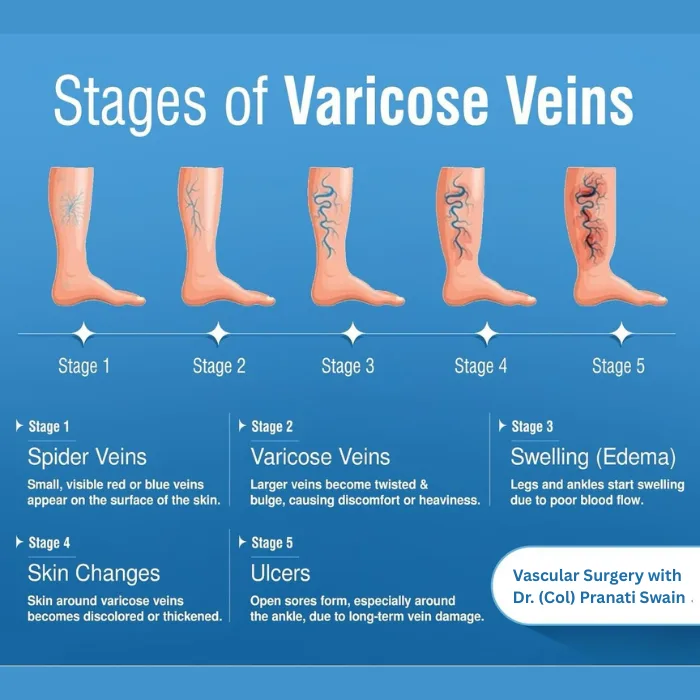
What Are Varicose Veins?
Varicose veins are enlarged, twisted, and swollen veins—usually appearing on the legs or feet—caused by weakened or damaged vein valves. When these valves fail, blood pools in the veins, leading to visible bulging, discomfort, and sometimes more serious complications. Varicose veins treatment in Delhi is planned around that valve failure rather than the veins you can see on the surface.
While they may seem like a cosmetic concern, varicose veins are a medical condition that can lead to pain, skin changes, bleeding, and ulcers if left untreated.
Common Symptoms
Varicose veins can range from mild to severe. Symptoms may include:
- Swollen, twisted, or bulging blue/purple veins
- Aching, heaviness, or throbbing in the legs
- Leg cramps, especially at night
- Itching around the veins
- Skin discoloration or ulcers near the ankles
- Worsening discomfort after standing or sitting for long periods
If you experience any of these symptoms, it’s time to seek a vascular specialist’s opinion.
Causes & Risk Factors
Several factors increase the risk of varicose veins:
- Family history of vein disorders
- Standing or sitting for prolonged periods
- Obesity or sedentary lifestyle
- Pregnancy
- Age (risk increases with age)
- Hormonal changes (menopause, birth control pills)
Why You Shouldn’t Ignore Varicose Veins
Untreated varicose veins can lead to serious complications like:
- Chronic Venous Insufficiency (CVI)
- Skin ulcers or open sores
- Blood clots (Superficial Thrombophlebitis or DVT)
- Bleeding from ruptured veins
Early treatment not only improves appearance and comfort—but also prevents long-term damage.
Varicose Veins Treatment Options in Delhi
Under the care of Dr. (Col) Pranati Swain, Vascular & Endovascular Surgeon, DNB (Peripheral Vascular Surgery), we offer modern, minimally invasive treatments that prioritise comfort and a short recovery, with outcomes discussed individually at consultation.
Our Treatment Options:
Duplex Ultrasound Evaluation
A non-invasive diagnostic test to map your veins and assess valve function and blood flow.
Endovenous Laser Ablation (EVLA)
A minimally invasive laser procedure (EVLA) to close off damaged veins with minimal discomfort and downtime.
Sclerotherapy
An effective solution for smaller varicose and spider veins—injecting a solution to collapse and fade the affected veins.
Radiofrequency Ablation (RFA)
Uses controlled heat to close varicose veins from the inside, offering relief with a short recovery period.
Ambulatory Phlebectomy
A minor surgical procedure to remove superficial varicose veins through tiny skin punctures.
Compression Therapy & Lifestyle Guidance
We guide patients in using medical-grade compression stockings and adopting healthy habits to prevent recurrence.
Varicose Veins Treatment Delhi: Assessment and Options
Varicose veins develop when the valves in the leg veins become weak or fail to close properly. This allows blood to flow backward and collect in the veins instead of returning efficiently to the heart. As pressure builds, the veins can enlarge, twist, and become visible beneath the skin.
Varicose veins treatment in Delhi at Sir Ganga Ram Hospital starts with a duplex ultrasound to identify the source and extent of venous reflux. The veins visible on the surface may not be the actual cause of the problem. Reflux often originates in a deeper trunk vein, and treating only the visible veins without addressing the underlying source can lead to recurrence.
Dr. (Col) Pranati Swain offers endovenous laser ablation, radiofrequency ablation, foam sclerotherapy, and phlebectomy, with many procedures performed as day-care treatments under local anesthesia. Patients may seek treatment for aching or swelling that worsens in the evening, darkened skin around the ankle, bleeding from a varicose vein, or a persistent leg ulcer. Because the underlying venous problem varies from person to person, ultrasound helps determine the most suitable treatment.
How Varicose Veins Are Diagnosed
A duplex ultrasound is the key test for assessing varicose veins and guiding treatment. It identifies which veins are affected by reflux, shows how far the abnormal blood flow extends, and checks whether the deep veins are functioning normally. The scan is non-invasive, requires no needles or contrast dye, and usually takes about 20 minutes.
Part of the examination may be performed while you are standing, as gravity can make venous reflux easier to detect. NICE guidance recommends duplex ultrasound as the standard assessment for varicose veins. By identifying the source of the problem, the scan helps doctors treat the underlying venous reflux rather than only the visible veins.
Which Treatment Comes First?
When varicose veins are caused by reflux in a trunk vein, NICE recommends endothermal ablation as the first treatment option. This includes endovenous laser ablation and radiofrequency ablation, which close the faulty vein from inside using a minimally invasive catheter-based technique. When endothermal treatment is not suitable, ultrasound-guided foam sclerotherapy may be considered next. Surgery is generally considered when neither option is appropriate.
The most suitable approach should be based on the ultrasound findings, the pattern of venous reflux, and the individual patient rather than simply on which technique a particular clinic provides.
| Treatment | What it involves | Usual setting |
|---|---|---|
| Endovenous laser ablation (EVLA) | A laser fiber is passed into the faulty vein through a needle puncture, sealing it as it is withdrawn | Day care, local anesthesia |
| Radiofrequency ablation (RFA) | The same approach using radiofrequency energy instead of laser | Day care, local anesthesia |
| Foam sclerotherapy | Foam injected into the vein under ultrasound guidance, closing it | Clinic or day care |
| Ambulatory phlebectomy | Bulging surface veins removed through tiny incisions, often with ablation | Day care |
| Compression stockings | Symptom control while a decision is made, or when a procedure is unsuitable | At home, daily |
Compression stockings help with aching and swelling, but NICE is clear that they are not a substitute for treating the underlying reflux unless a procedure is unsuitable for you. After a procedure, you usually wear stockings for a short period rather than indefinitely.
When to See a Vascular Surgeon About Varicose Veins
Book an appointment if your legs ache, itch, swell, or feel heavy, if the veins are getting worse, or if the skin near your ankle has changed color or hardened. Skin changes can signal that pressure in the leg veins has been high for a long time, and they are easier to reverse before an ulcer forms. A sore on the lower leg that hasn't healed in two weeks needs assessment, as does a healed ulcer that keeps coming back, which points to underlying chronic venous insufficiency. A varicose vein that bleeds is an urgent issue. Lie down, raise the leg, and press firmly on the bleeding point, then get medical help the same day.
Recovery After Varicose Vein Treatment
Most patients can return home on the day of their varicose vein procedure. Desk-based work can often be resumed within two to three days, while returning to the gym may take around two weeks. Recovery times vary depending on the treatment performed and the number of veins treated.
Bruising along the treated vein is common, along with a mild pulling or tight sensation that may continue for two to three weeks as the vein heals. Simple pain relief, such as paracetamol, is usually sufficient. Walking from the first day is encouraged to maintain blood flow through the deep veins and help reduce the risk of blood clots. Your surgeon will advise you on how long to wear compression stockings and when it is safe to resume driving.
What Varicose Veins Treatment Costs in Delhi?
There is no fixed cost for varicose vein treatment, as the total expense varies from patient to patient. It depends on the procedure selected, whether one or both legs require treatment, the number of veins requiring phlebectomy, the hospital room category, and the extent of insurance coverage. In India, many insurance policies cover varicose vein treatment when it is medically necessary to manage symptoms rather than performed solely for cosmetic reasons.
Some policies may also include a waiting period. The insurance desk at Sir Ganga Ram Hospital can help verify your coverage and confirm whether cashless treatment is available before admission. A treatment estimate can be provided after the duplex ultrasound, once the extent of the venous disease and the recommended treatment plan have been established. To discuss your options, book a consultation or call +91 98715 47888.
Why Choose Us?
- Over 20 years of vascular surgical experience
- Personalized treatment plans
- Focus on patient comfort, safety, and long-term results
- Duplex ultrasound assessment and image-guided treatment
- Compassionate care from a highly experienced team
Don’t Let Varicose Veins Hold You Back
Relief is possible—and often easier than you think. Whether you’re seeking relief from leg pain or simply want to restore confidence in your appearance, we’re here to help.
To discuss varicose veins treatment in Delhi, schedule a consultation with Dr. (Col) Pranati Swain, or call +91 98715 47888.
Healthy legs. Confident steps. Let’s treat varicose veins the right way.
Frequently asked questions
Do varicose veins come back after treatment?
Is laser treatment better than surgery for varicose veins?
Will I need to stay in hospital?
Does varicose vein treatment leave scars?
Can varicose veins be treated without surgery?
Is varicose vein treatment covered by insurance in India?
Medically reviewed by Dr. (Col) Pranati Swain, MBBS, MS (General Surgery), DNB (Peripheral Vascular Surgery) · Last reviewed 29 Sep 2026
The information on this page is for general education and is not a substitute for professional medical advice, diagnosis or treatment. Outcomes vary between patients — always consult a qualified clinician about your own condition. If you have a medical emergency, call your local emergency number immediately. Read the full disclaimer.