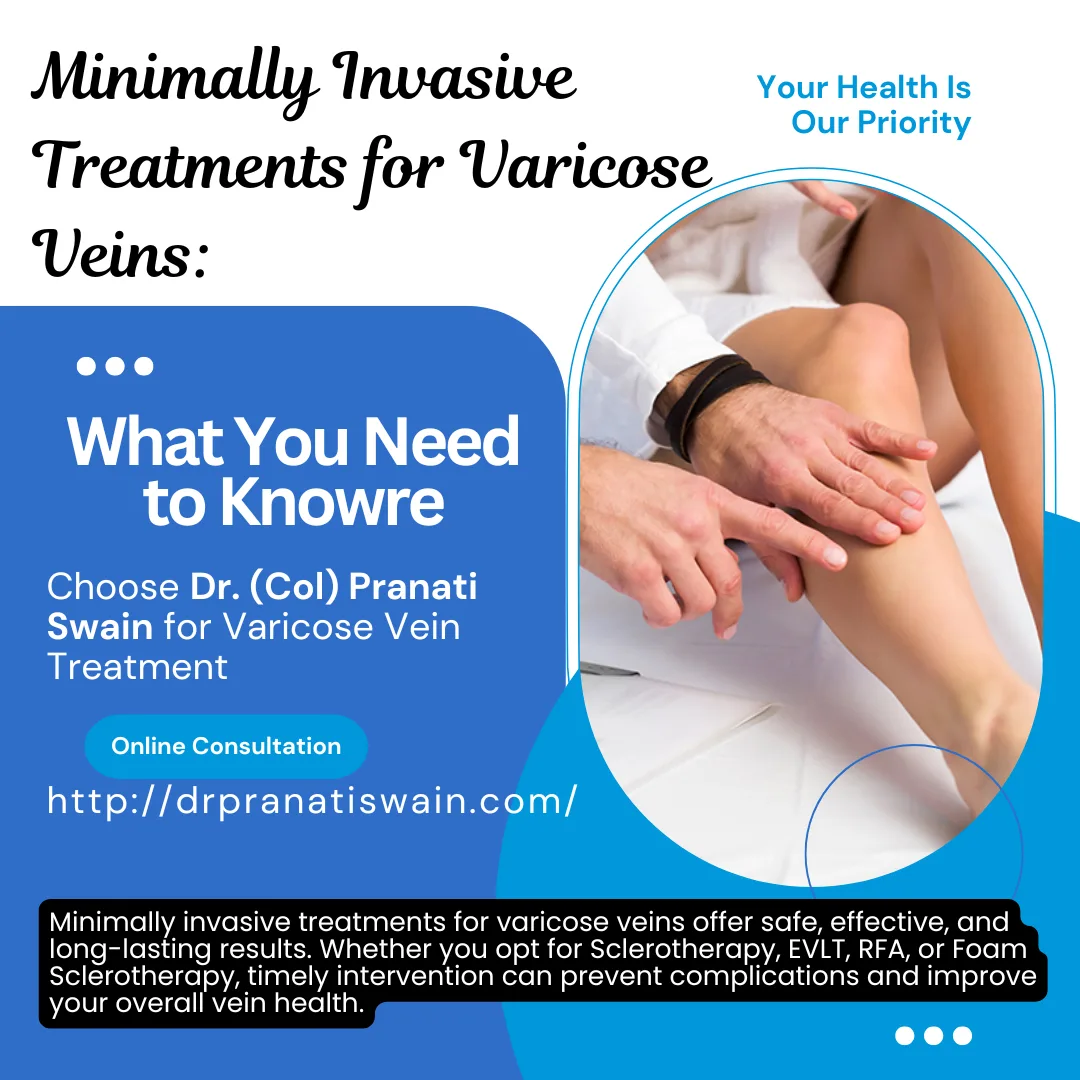
Varicose veins are swollen, twisted veins that usually appear on the legs due to faulty valves and poor blood circulation. While varicose veins are often considered a cosmetic concern, they can sometimes lead to discomfort, pain, and other complications. Fortunately, with advancements in medical technology, treating varicose veins has become easier, safer, and more effective.
Today, minimally invasive procedures offer quicker recovery times and excellent outcomes, allowing patients to resume their normal routines shortly after treatment. This blog explores the most common and effective minimally invasive treatments for varicose veins, including Sclerotherapy, Endovenous Laser Therapy (EVLT), Radiofrequency Ablation (RFA), and Foam Sclerotherapy.
1. Sclerotherapy: A Quick and Effective Solution for Spider and Varicose Veins
Sclerotherapy is one of the most commonly used procedures for treating smaller varicose and spider veins. During this treatment, a special solution (sclerosant) is injected directly into the affected vein, causing it to collapse and eventually disappear as the body absorbs it.
How It Works:
- A sclerosant solution is injected into the vein.
- The vein walls stick together, preventing blood flow.
- The collapsed vein is absorbed by the body over time, and blood is redirected to healthier veins.
Ideal For:
- Spider veins and smaller varicose veins
- Cosmetic improvements with minimal discomfort
Benefits:
- Minimally invasive and quick (30–45 minutes)
- No need for anesthesia
- Visible results within a few weeks
2. Endovenous Laser Treatment (EVLT)
EVLT (also known as Endovenous Laser Ablation) is a modern, highly effective treatment for larger varicose veins. This technique uses laser energy to seal off the damaged vein, redirecting blood flow to healthier veins.
- A thin catheter is inserted into the affected vein.
- Laser energy is delivered through the catheter, heating the vein walls.
- The heat causes the vein to collapse and close, gradually fading over time.
- Larger, symptomatic varicose veins
- Patients seeking faster recovery with minimal pain
- Minimally invasive with no surgical incisions
- Day-care procedure under local anaesthesia
- Quick recovery with minimal discomfort
3. Radiofrequency Ablation (RFA): Heat-Based Treatment with Minimal Downtime
Radiofrequency Ablation (RFA) is another effective treatment that uses heat generated by radiofrequency energy to close off damaged veins. This minimally invasive procedure is widely used to treat larger varicose veins, ensuring faster recovery and minimal pain.
- A catheter is inserted into the vein.
- Radiofrequency energy is delivered to heat and collapse the vein walls.
- The vein closes, and blood is rerouted to healthier veins.
- Patients with larger, symptomatic varicose veins
- Those seeking a minimally invasive alternative to surgery
- Outpatient procedure with quick recovery
- Minimal pain and discomfort
- Closes the faulty vein using radiofrequency energy
4. Foam Sclerotherapy: Enhanced Treatment for Larger Veins
Foam Sclerotherapy is an advanced version of traditional sclerotherapy, where the sclerosant solution is turned into foam before being injected. This method allows the solution to cover a larger surface area, making it ideal for treating larger varicose veins.
- The sclerosant is transformed into foam.
- The foam is injected into the affected vein, causing it to close.
- The vein gradually fades away as the body absorbs it.
- Larger varicose veins that cannot be treated with traditional sclerotherapy
- Patients seeking a non-surgical approach with effective outcomes
- More effective for larger veins
- Minimally invasive with no need for anesthesia
- Faster and more targeted results
Which Treatment Is Right for You?
Choosing the right treatment for varicose veins depends on: The size and severity of the veins Presence of symptoms such as pain or swelling Your overall health and medical history
A consultation with a vascular specialist will help determine the best course of action. They will evaluate your condition and recommend the most appropriate treatment to ensure optimal results.
Why Choose Dr. (Col) Pranati Swain for Varicose Vein Treatment?
With over two decades of experience, Dr. (Col) Pranati Swain is a Vascular & Endovascular Surgeon, DNB (Peripheral Vascular Surgery), renowned for her expertise in managing vascular conditions. Her patient-centric approach, combined with cutting-edge techniques, ensures the best possible outcomes for individuals seeking treatment for varicose veins.
Schedule Your Consultation Today!
If you're experiencing symptoms of varicose veins or want to explore treatment options, don’t wait! Contact Dr. (Col) Pranati Swain today for a personalized evaluation and guidance on the treatment plan suited to you.
Email: drpranatiswain@gmail.comMinimally invasive treatments for varicose veins treat the faulty vein at its source. Whether you opt for Sclerotherapy, EVLT, RFA, or Foam Sclerotherapy, timely intervention can prevent complications and improve your overall vein health.
Related
Varicose Veins Treatment in India: Minimally Invasive OptionsMarch 29, 2025Similar post
Minimally Invasive Varicose Vein SurgeryApril 17, 2025Similar post
Varicose Veins vs Spider Veins: Key Differences and Treatment OptionsMarch 29, 2025Similar post
Medically reviewed by Dr. (Col) Pranati Swain, MBBS, MS (General Surgery), DNB (Peripheral Vascular Surgery) · Last reviewed 26 Aug 2026
The information on this page is for general education and is not a substitute for professional medical advice, diagnosis or treatment. Outcomes vary between patients — always consult a qualified clinician about your own condition. If you have a medical emergency, call your local emergency number immediately. Read the full disclaimer.